


Have you met our General Manager, Harry? He knows that not all things are created equal, especially car dealerships. Watch the video below to meet him (digitally) then come on by Loveland Ford Lincoln to meet him and the rest of our team in person. Let us prove to you that we try harder!
The Myth of Idling
Though we've had a relatively warm winter so far, there are still those cold mornings that make you want to warm your vehicle up before hitting the road. Many of us have this skewed impression that not allowing the car to warm up before driving will do some form of mystery damage. Of course, warming the vehicle's cabin briefly for personal comfort in the bitter cold makes sense, but putting a warm coat and scarf on might make more sense while you wait for the heat to start working. When talking about the actual mechanics of your vehicle, idling is a completely unnecessary activity that simply wastes gas and puts additional exhaust into the environment. Make sure you think about this before you turn your car on and let it sit for 10 minutes before heading to work. According to the “Anti-Idling Primer,” 5 minutes of idling per day for a year burns 10-20 gallons of gas and emits 220-440 lbs of Carbon Dioxide, depending on the size of your engine (see chart below). Modern vehicles, due to their efficient fuel injectors, only need approximately 30 seconds to get the oil circulating before it’s good to go. In fact, driving warms the vehicle much more quickly than idling. So you’ll actually achieve ideal engine temperatures more quickly by getting on your way than you will by sitting in the driveway waiting for the temperature gauge to go up. By recognizing the inefficiency of idling, you can save yourself a significant amount of gas, money, and time. The same concept holds true when talking about idling vs. re-starting your vehicle. Many people idle during quick errands, or waiting outside a friend’s house, assuming it’ll burn more gas to stop and restart their car than to idle for a few minutes. A general rule of thumb, from the Environmental Defense Fund, is that 10 seconds of idling burns about the same amount of gas as starting the engine. So unless that idle outside your friend’s house is 10 seconds or less, it’s much more practical to turn the engine off and restart when you’re ready to go. It’s better for your vehicle, your bank account and the environment!
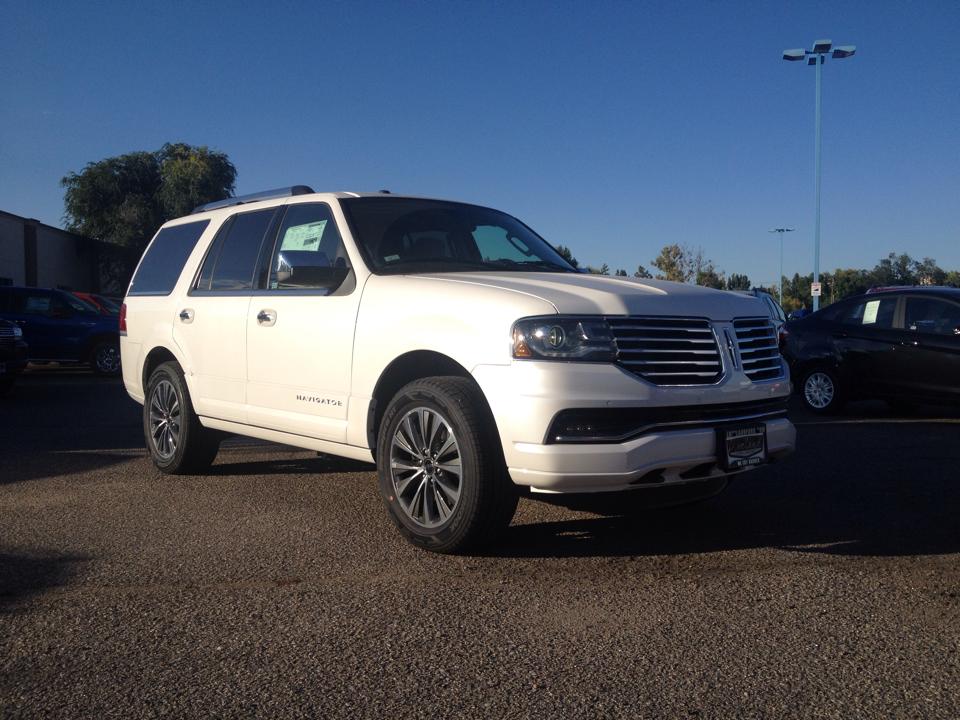
The 2015 Lincoln Navigator Has Arrived!
The wait is over! The 2015 Lincoln Navigator has finally arrived at Loveland Ford, and we're excited to share it with you. Many of the aesthetic changes are obvious to anyone who was familiar with the previous generation Navigator. Both the front and back end received some changes and the 2015 now sports the signature split wing grille that you see on the MKC and MKZ. Wheels are now come standard at 20" with optional 22's (growing from standard 18" with optional 20"). The headlights, running lights and taillights are all now LED, with over 100 LEDs making up the taillamps. It's a subtle, but nice, touch. Power running boards have also been added. Inside, we see a new two-toned scheme featuring high end leather and ziricote wood. The cabin is HUGE, at 159.5 cubic feet and 128.9 cubic feet for storage. The space offers both luxury and utility. The 2015 Navigator boasts the most powerful version of Ford's 3.5-liter, twin-turbocharged EcoBoost V6 ever, offering 380 horsepower and 460 pound-feet of torque. Believe it or not, there are no upsized turbos or new breathing tricks, just some software tweaks that are giving it all this power. There's no denying that this is a beautiful machine, inside and out. It drives just as beautifully, but that's hard to describe without getting behind the wheel for yourself. Come down to Loveland Ford Lincoln to check out this refreshed Navigator and see what it can do!
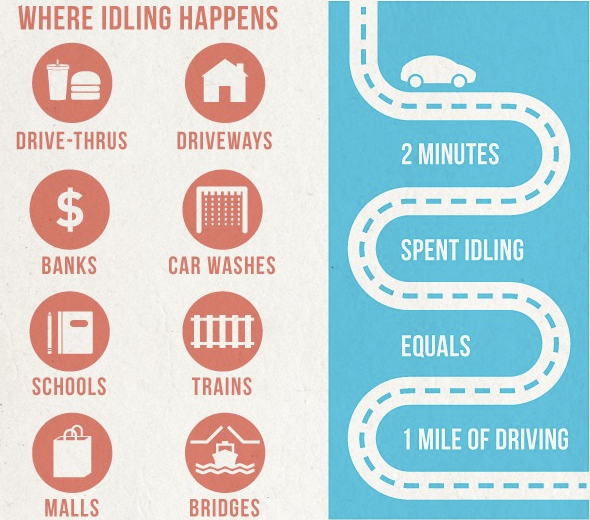
Myths About Idling
For many of us, the arrival of summer brings a lot more road trips and time spent behind the wheel. We all have different driving habits, but one this is certain, most of us idle much more than needed. Of course it's nice to keep the A/C running in the summer and heat going in the winter. However, if the inside of the car is at a comfortable temperature, a few minutes without it running shouldn't change the temperature much. And as soon as it becomes uncomfortable, you can always turn it back on. Even two short minutes will save you the same amount of gas it takes to drive one mile. According to the “Anti-Idling Primer,” 5 minutes of idling per day for a year burns 10-20 gallons of gas and emits 220-440 lbs of Carbon Dioxide annually, depending on the size of your engine. By recognizing the inefficiency of idling, you can save yourself a significant amount of gas and money while reducing your negative impact on the environment. But what about the gas it takes to re-start your engine? Many people idle during quick errands, or waiting outside a friend’s house, assuming it’ll burn more gas to stop and restart their car than to idle for a few minutes. A general rule of thumb, from the Environmental Defense Fund, is that 10 seconds of idling burns about the same amount of gas as starting the engine. So unless that idle outside your friend’s house is 10 seconds or less, it’s much more practical to turn the engine off and restart when you’re ready to go!
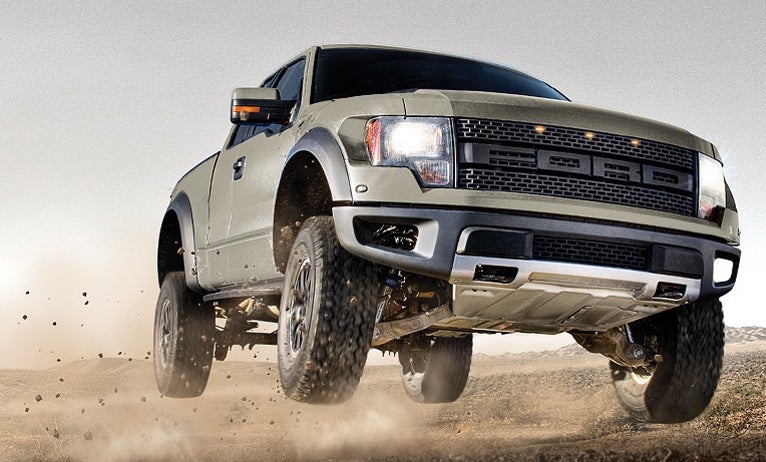
Ford F-150 SVT Raptor History and Footage of a Used 2013 in Stock Now!
The Ford F-150 SVT Raptor made its debut at the 2008 Specialty Equipment Manufacturer's Association (SEMA) show in Las Vegas. As always, the Ford booth at the show was exciting, but this time there was a buzz of something BIG. Two trucks waited patiently beneath their silk sheets. After months of spy shots and speculations, the Raptor was ready to be introduced to the public. In Ford's words, this truck was made to be "versatile enough to take on the most challenging desert adventures, as well as the every day commute." The second truck, sitting next to the Ratpor at the SEMA show that day in 2008 was what they dubbed the Raptor R (for race) which they would be taking to Mexico for following week's the Tecate SCORE Baja 1000. Ford's history in the Baja 1000 has always been strong, taking more overall four-wheel titles than any other manufacturer. Now they were there to race what is, quite possibly, one of the coolest and toughest production trucks ever built. They took third that year with the Raptor, impressive for a such a new vehicle. According to Brian Wolfe, the Ford Racing Technology director, “Racing the new truck in the elite Baja 1000 was the ultimate off-road test and allowed Ford to evaluate how well the F-150 SVT Raptor would hold up under the most unique and extreme conditions.” That's how it all began in 2008, and the Raptor continues to impress year after year. Current specs on the ford raptor include a Big-Bore 6.2L V8 engine, 411 horsepower, 434 lb.-ft. of torque, 4.02-inch bore with large intake and exhaust valves, and 4.10 TORSEN front differential which helps improve handling over obstacles, in slippery conditions and on steep grades. Not to mention the unbelievable sound system. We recently took in a used 2013 Raptor and couldn't resist the opportunity to take one into the mountains for a quick glimpse into how the truck handles both on and off road. Check out some of the footage below.
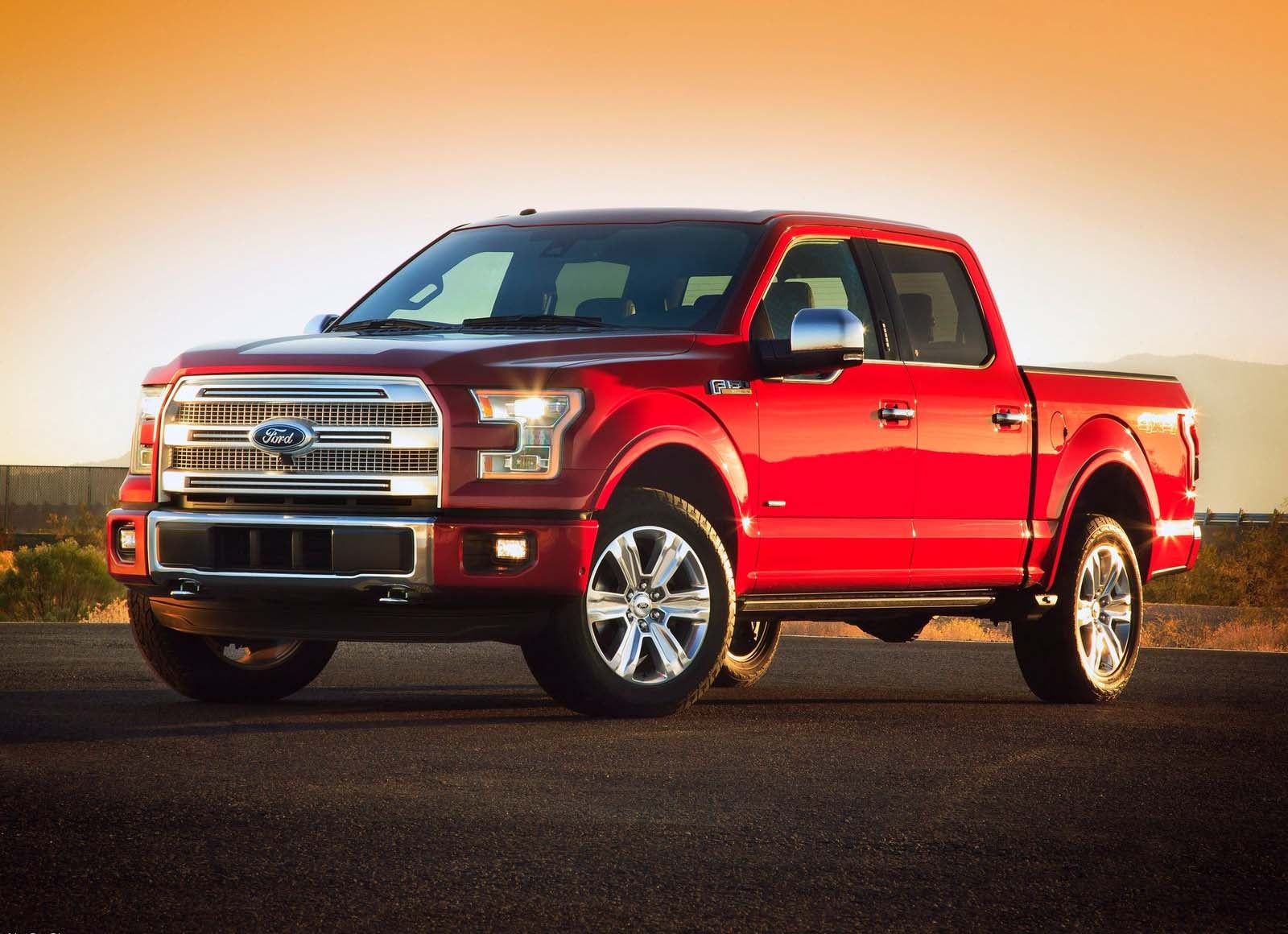
2015 F-150: Built Ford Tough
Built Ford Tough. It's more than just a tagline... much more. While developing the new 2015 F-150, Ford put the truck through hundreds of rigorous torture tests to ensure it would live up to their standards. Torture test is almost an understatement, as the beast of a truck was taken from sweltering heat to sub-zero temperatures, towed a trailer at max weight up a mountain, had a 55 gallon drum dropped repeatedly in the bed, sped through gravel and jagged scrap iron, and literally took an acid bath. Check out a few of our favorite tests below. If this doesn't make you a believer that an aluminum truck can be a durable as ever, I don't know what will! Some of these tests are so extreme, just five days is the equivalent of 10 years and 150,000 miles of abuse by even the roughest customers. Silver Creek Torture Test From Furnace to Ice Box Power Hop Hill Twist Ditch Drum Drop